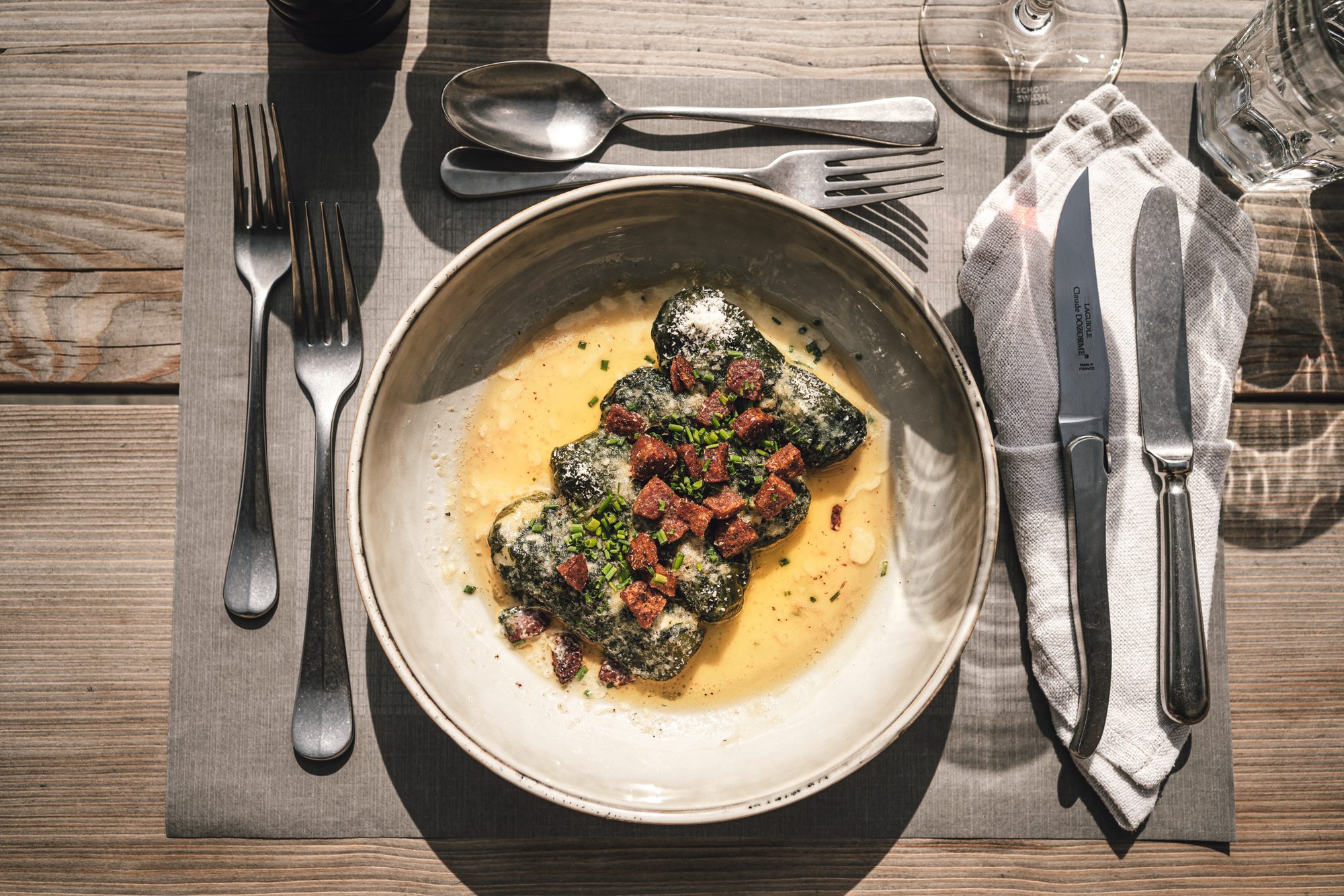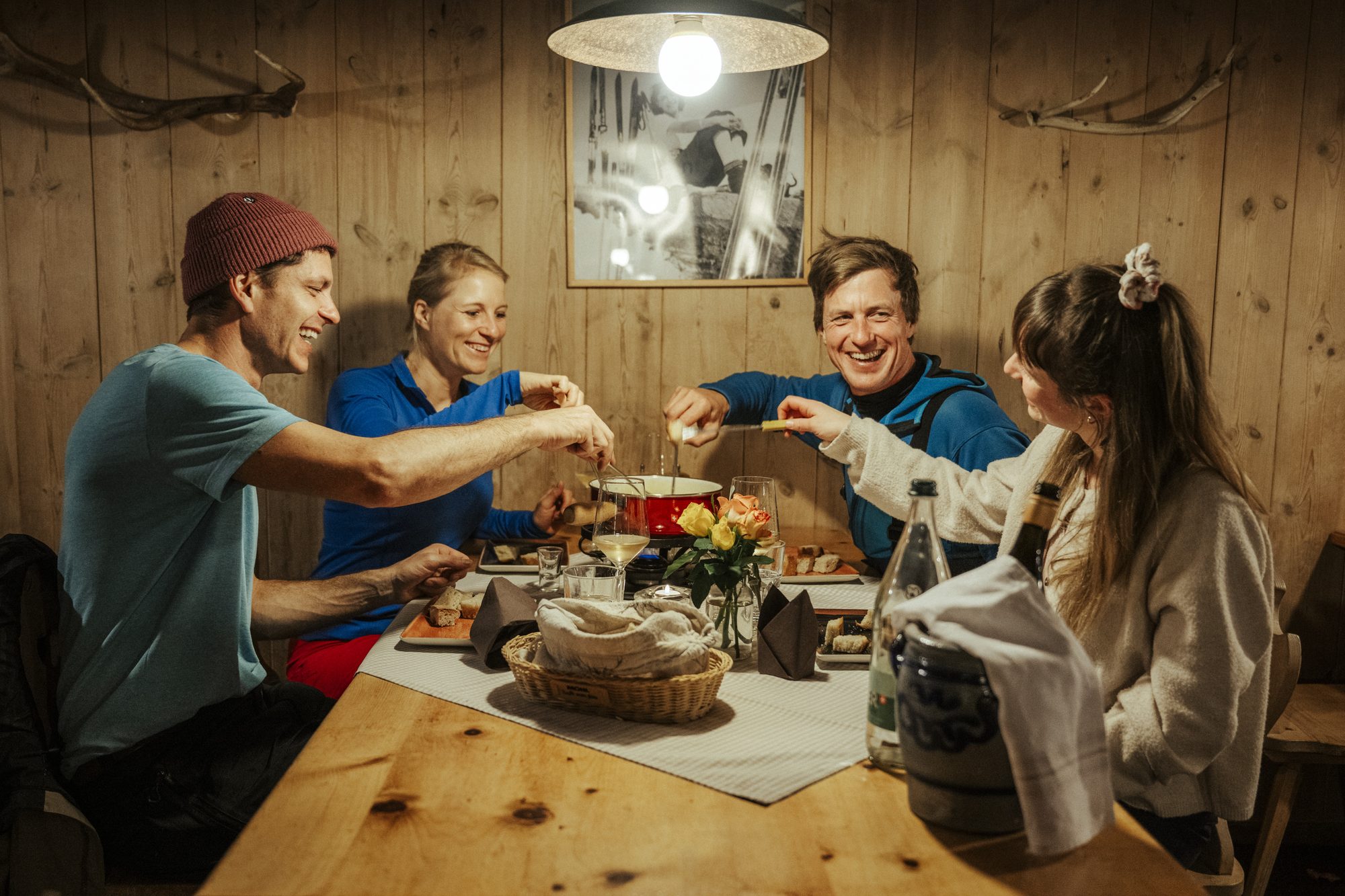
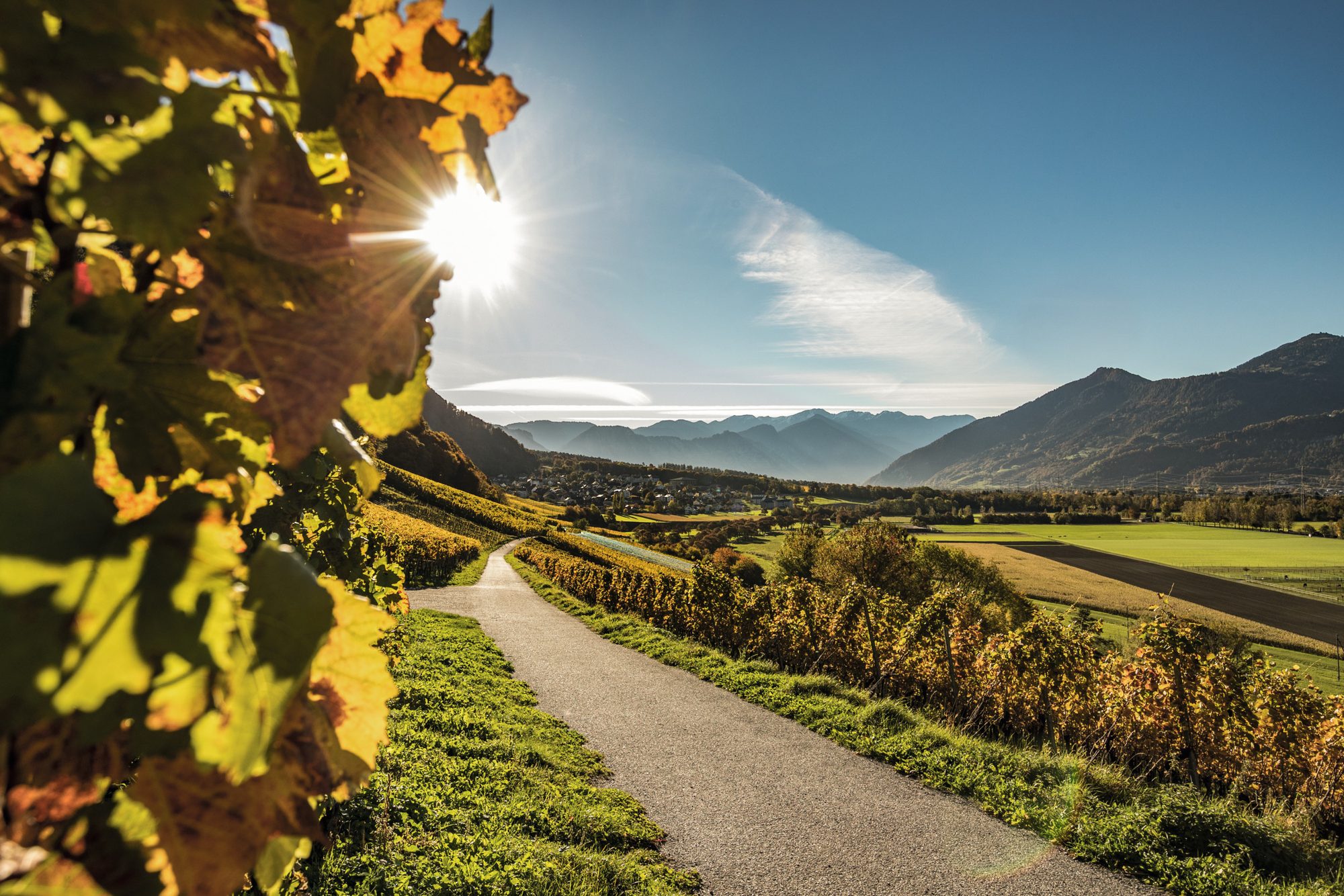
Say "Swiss wine" and most people draw a blank. Yet Switzerland has vineyards, and good ones. Only a very small share is exported and the rest is drunk at home. If you want to get to know Swiss wine, you have to come to it.
Graubünden is known for mountains rather than wine. But in its north, in the Rhine valley between Chur and the border with Liechtenstein, lies a small wine region called the Bündner Herrschaft, which connoisseurs speak of with respect. Decanter magazine calls it "Burgundy with altitude".
The Bündner Herrschaft at a glance
| Villages | Fläsch, Maienfeld, Jenins, Malans |
|---|---|
| Vineyard area | around 400 hectares (sources give 350 to 420 ha) |
| Main grape | Pinot Noir, locally Blauburgunder, roughly three quarters of the vines |
| The rarity | Completer, an old white grape first mentioned as early as 1321 |
Pinot Noir below the mountains
Pinot Noir is a demanding grape. It needs a cool climate, a long autumn and an attentive winemaker. The Bündner Herrschaft offers all of these: the vines grow on slopes below the mountains, and in autumn the grapes are ripened by the warm föhn, the south wind that blows down the Rhine valley from the Alps. The results are elegant, fresh reds that are often compared with Burgundy.
Pinot Noir covers about three quarters of the vineyards. Alongside it grow Chardonnay, Müller-Thurgau (called Riesling-Sylvaner in Switzerland) and other varieties.
Completer: the wine that almost vanished
The real rarity is Completer, an old white grape that written records mention as early as the 14th century. It is associated above all with the village of Malans. It makes full, expressive whites that suit cheese and mountain food. You will rarely come across a bottle, so if you see Completer on a wine list, don't hesitate.
Heidi's country: Maienfeld is where Johanna Spyri set the story of Heidi, the girl from the mountains, which is why the area is nicknamed Heidiland. If you know the book or the cartoon, you will recognise the hills above the vineyards at once.
Swiss wines with mountain food
- With fondue and raclette the Swiss traditionally drink a dry white, typically Chasselas (Fendant) from Valais or Vaud.
- With air-dried meat and capuns a lighter Pinot Noir from the Bündner Herrschaft works well.
- With mature cheeses such as Gruyère, try a Completer or a more structured Pinot.
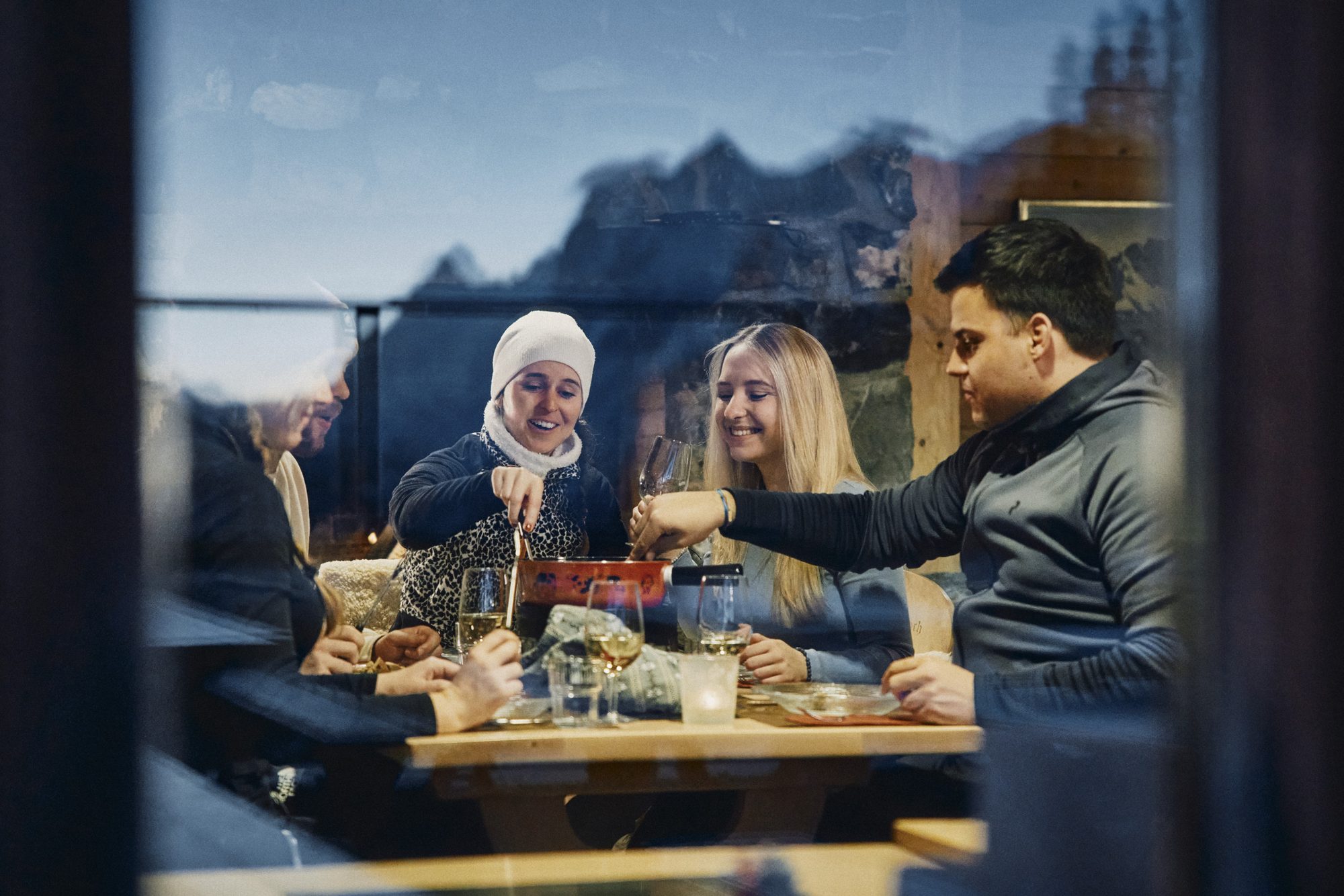
Jára's tip: TODO (favourite winery, the wine you bring to dinners).
How to taste
The best way is to visit the villages of the Bündner Herrschaft. Many wineries have their own cellars and tastings, but it is wise to call ahead. If you don't have time for the trip, you will find local wines in restaurants and wine shops in Chur and in good restaurants all over Graubünden.
Together with the mountain dishes we write about in our articles on capuns, Gerstensuppe and pizzoccheri, it is the best way to get to know Graubünden beyond the pistes.
Taste Swiss wines with us
On the Ski Eat Retreat (6–13 March 2027) we choose Swiss wines for every dinner at the chalet. After a day on the slopes with Jára, it is the best way to get to know them. Only 8 guests.