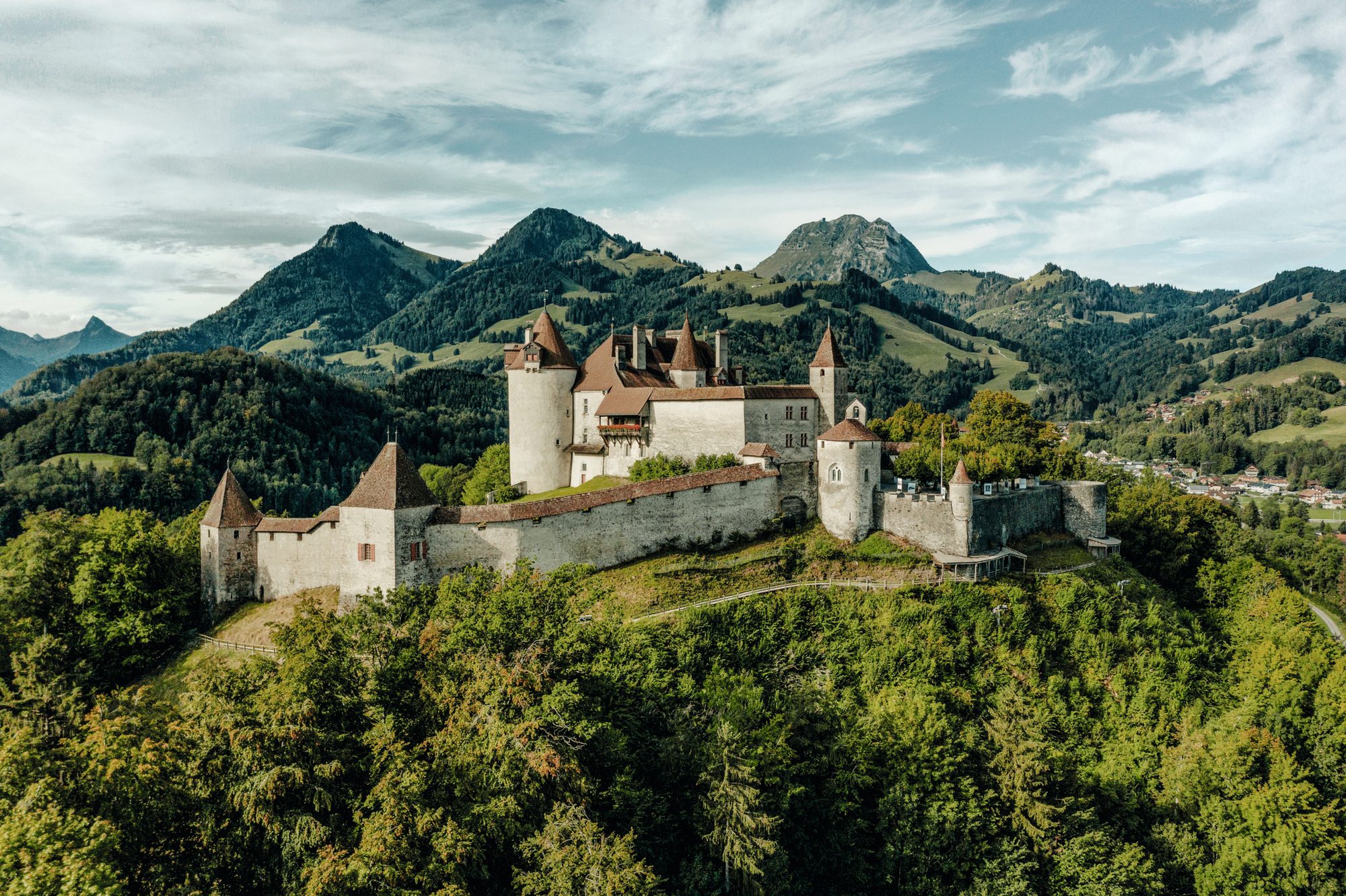
Gruyère doesn't come from Graubünden. It was born in the canton of Fribourg in western Switzerland, around the picture-book town of Gruyères with its castle on the hill. Even so, you will find it in every Swiss kitchen and every mountain hut, from Geneva to the Engadine. Because without Gruyère there is no real Swiss fondue.
What makes Gruyère Gruyère
Since 2001 Gruyère has had a protected designation of origin (today AOP). That means strict rules with no shortcuts:
- Raw milk. The milk is not pasteurised.
- Natural feed only. The cows eat grass in summer and hay in winter, with no silage and no additives.
- A defined region. It is made in the cantons of Fribourg, Vaud, Neuchâtel and Jura, and in a few communes of the canton of Bern.
- Long ageing. It may be sold after 5 months at the earliest, and the best wheels age much longer.
How it is made
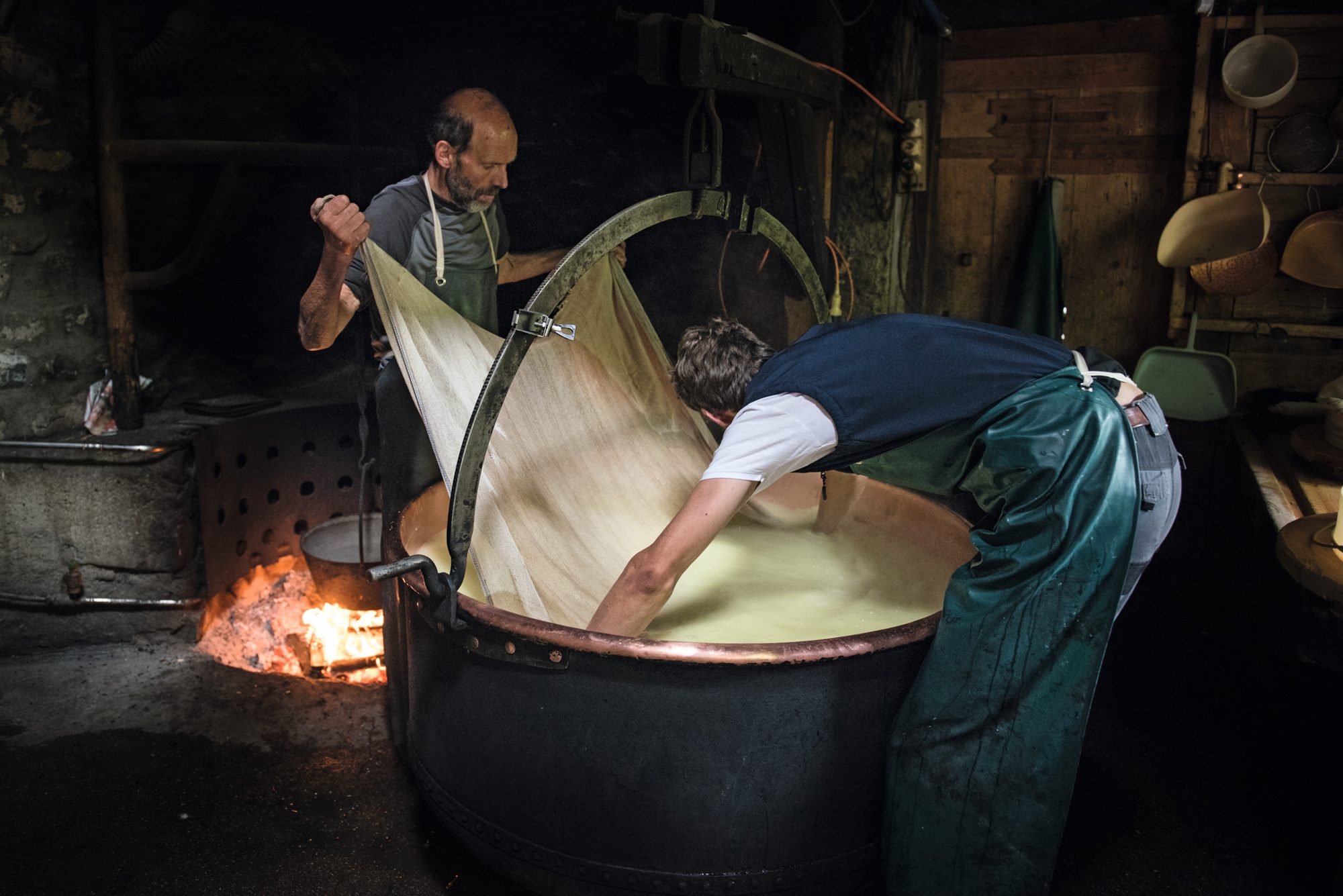
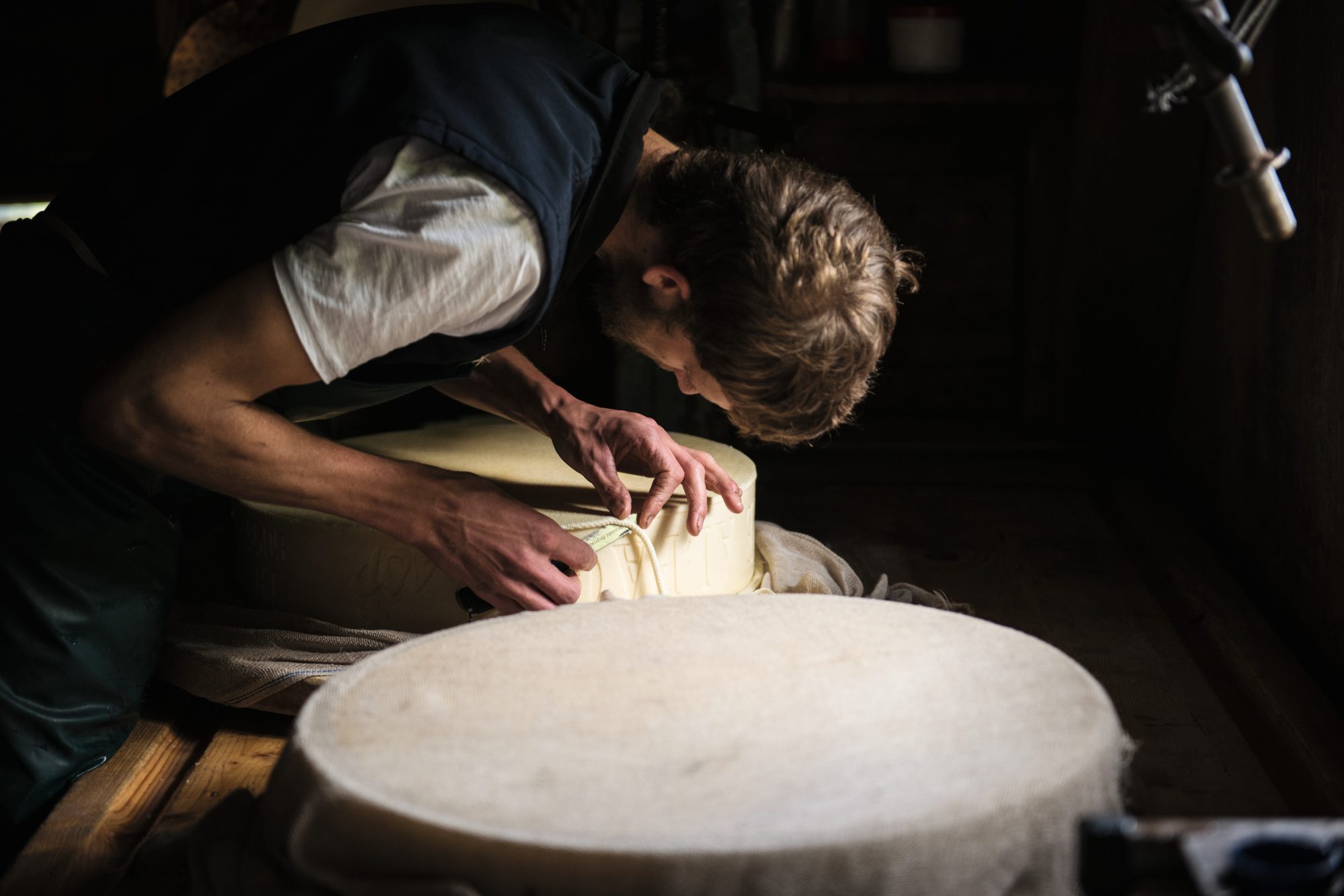
At the dairy the milk is poured into a large copper vat, warmed, and rennet is added. The curd is cut, heated, then lifted out of the vat in a cloth and pressed into moulds. A wheel weighs 25 to 40 kilograms, around 35 on average.
Then comes the most important part: ageing. The wheels spend months in the cellar, where they are regularly turned and rubbed with brine. After a few months experts inspect them, and only the best may carry the Gruyère AOP name.
Classic, Réserve, d'Alpage: which to choose
| Classic | aged for a shorter time, milder and creamier. Ideal for fondue and cooking. |
|---|---|
| Réserve | aged 10 months or more, with a stronger, nutty flavour and small crystals. Superb on its own with a glass of wine. |
| d'Alpage | made only in summer, up on the mountain pastures, from the milk of cows grazing alpine meadows. Rare and very aromatic. |
Gruyère and fondue
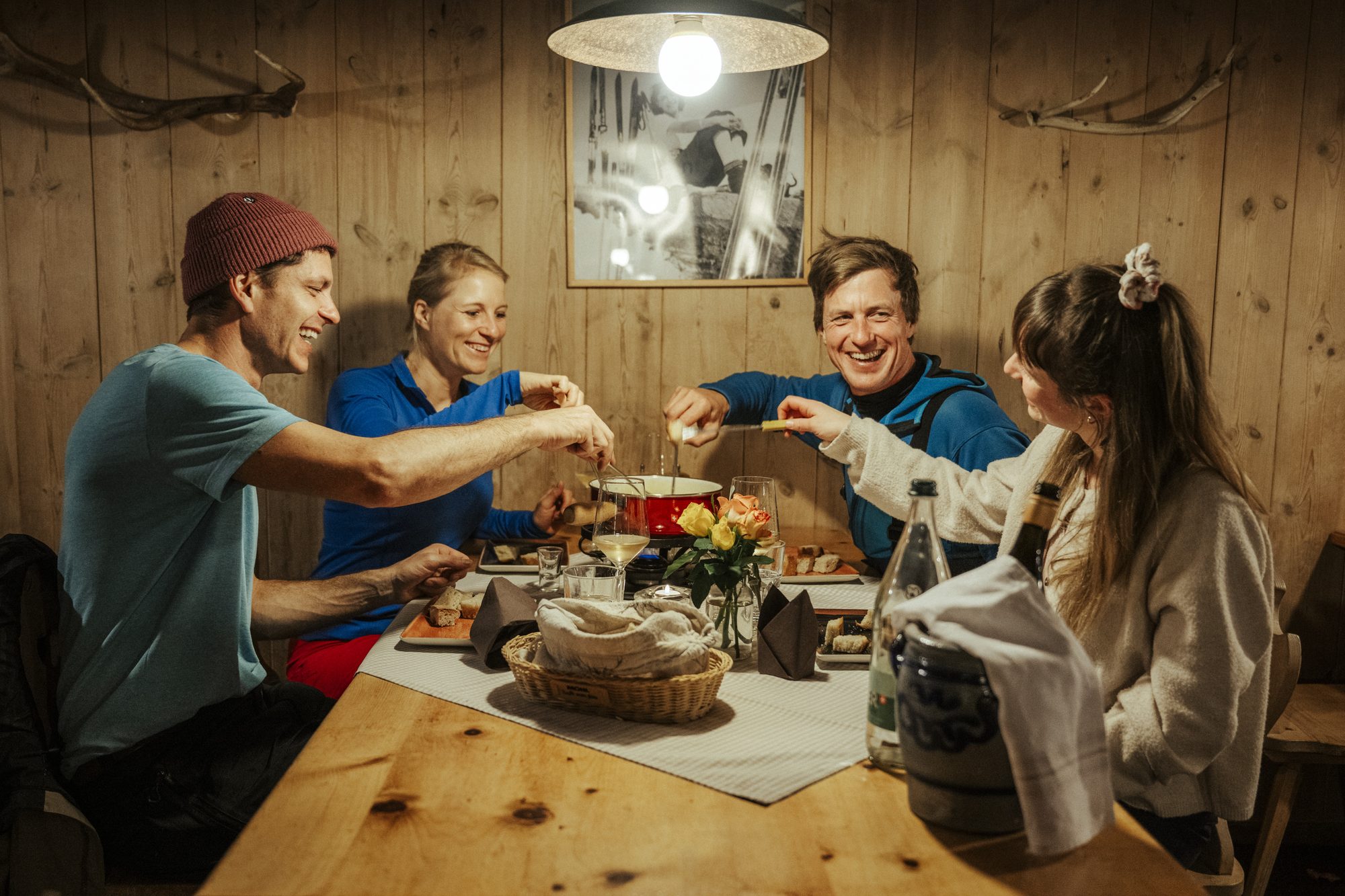
The best-known Swiss fondue is "moitié-moitié", half and half: half Gruyère and half Vacherin Fribourgeois, the other great cheese of Fribourg. The Gruyère gives the fondue strength and flavour, the Vacherin its creaminess. Add dry white wine, garlic and a chunk of bread on your fork.
Buying tip: look for "Le Gruyère AOP" stamped on the rind and ask how old it is. A younger Classic is fine for fondue; treat yourself to a Réserve for the cheese board.
Jára's tip: TODO (your fondue, which Gruyère you buy, what to drink with it).
A trip to Gruyères
If you are travelling around Switzerland, stop in Gruyères itself. The medieval town with its castle above green hills is one of the prettiest in the country, and nearby you can visit dairies where you can watch the cheese being made.
Cheese calls for wine. Which Swiss ones to try is in our article on Graubünden wines.
Fondue, raclette and Swiss cheese with us
On the Ski Eat Retreat (6–13 March 2027) we cook at the chalet five evenings a week: fondue, raclette and other mountain dishes with selected cheeses and wines, after a day on the slopes with Jára. Only 8 guests.