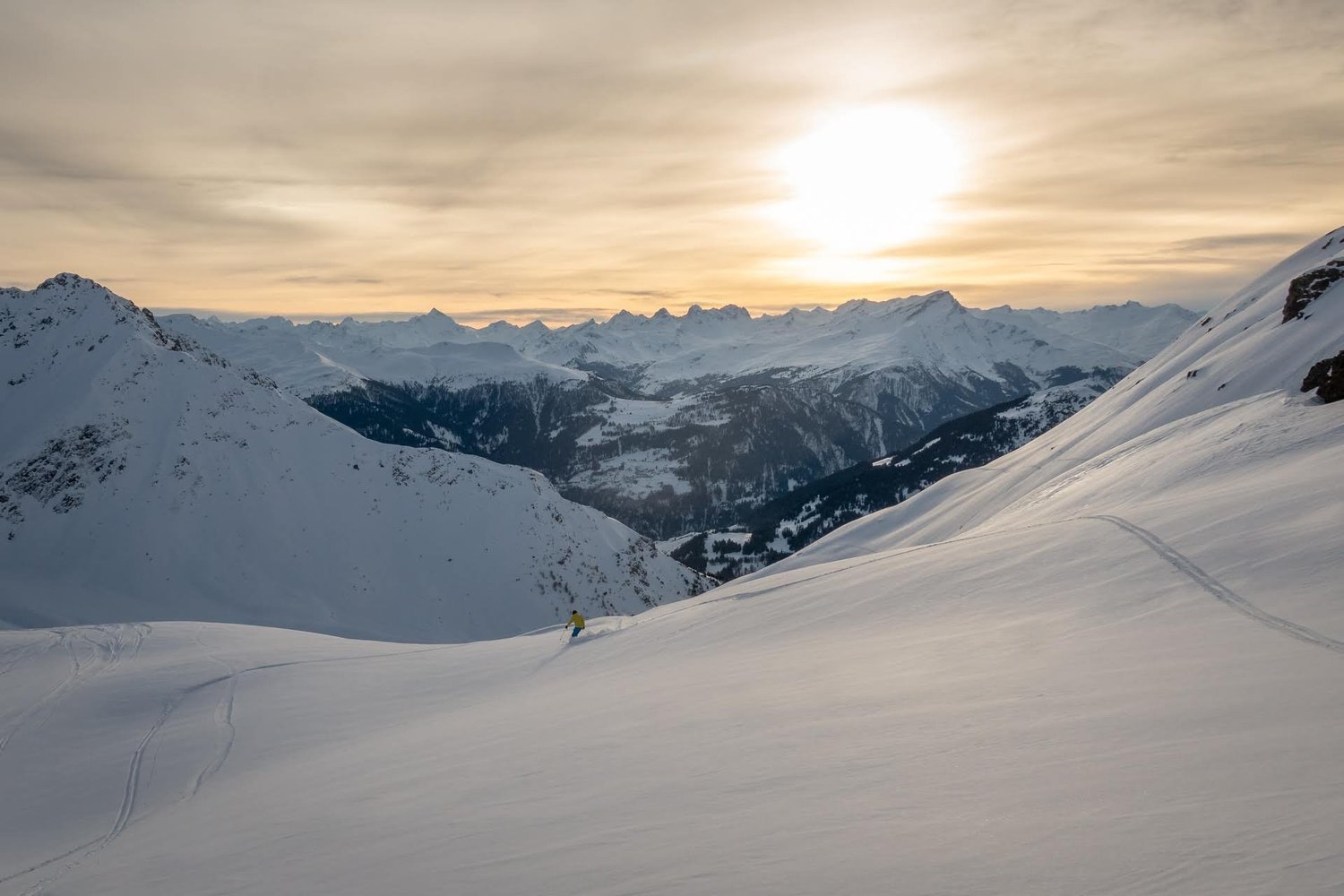
In the tracks of Sherlock Holmes
In March 1894 the writer Arthur Conan Doyle set off on skis from Davos with the local brothers Tobias and Johannes Branger, crossing the Maienfelder Furgga pass to Arosa. The brothers had done the route on skis a year earlier. Doyle wrote about the trip in "An Alpine Pass on Ski", published in The Strand Magazine in December 1894. The article is often credited with helping skiing catch on in Britain and putting Davos on the skiing map.
Today the crossing between Arosa and Davos is a classic ski tour. Most people do it the opposite way to Doyle, from Arosa to Davos.
The route at a glance
| Start | Arosa (past the Untersee and Stausee lakes, via Furggabödeli) |
|---|---|
| High point | Maienfelder Furgga, 2,436 m |
| Finish | Davos Frauenkirch |
| Ascent | about 900 m |
| Time | about 3 hours up, roughly 5 hours in total without breaks |
| Who it is for | experienced skiers who are confident off-piste and have touring equipment |
The climb
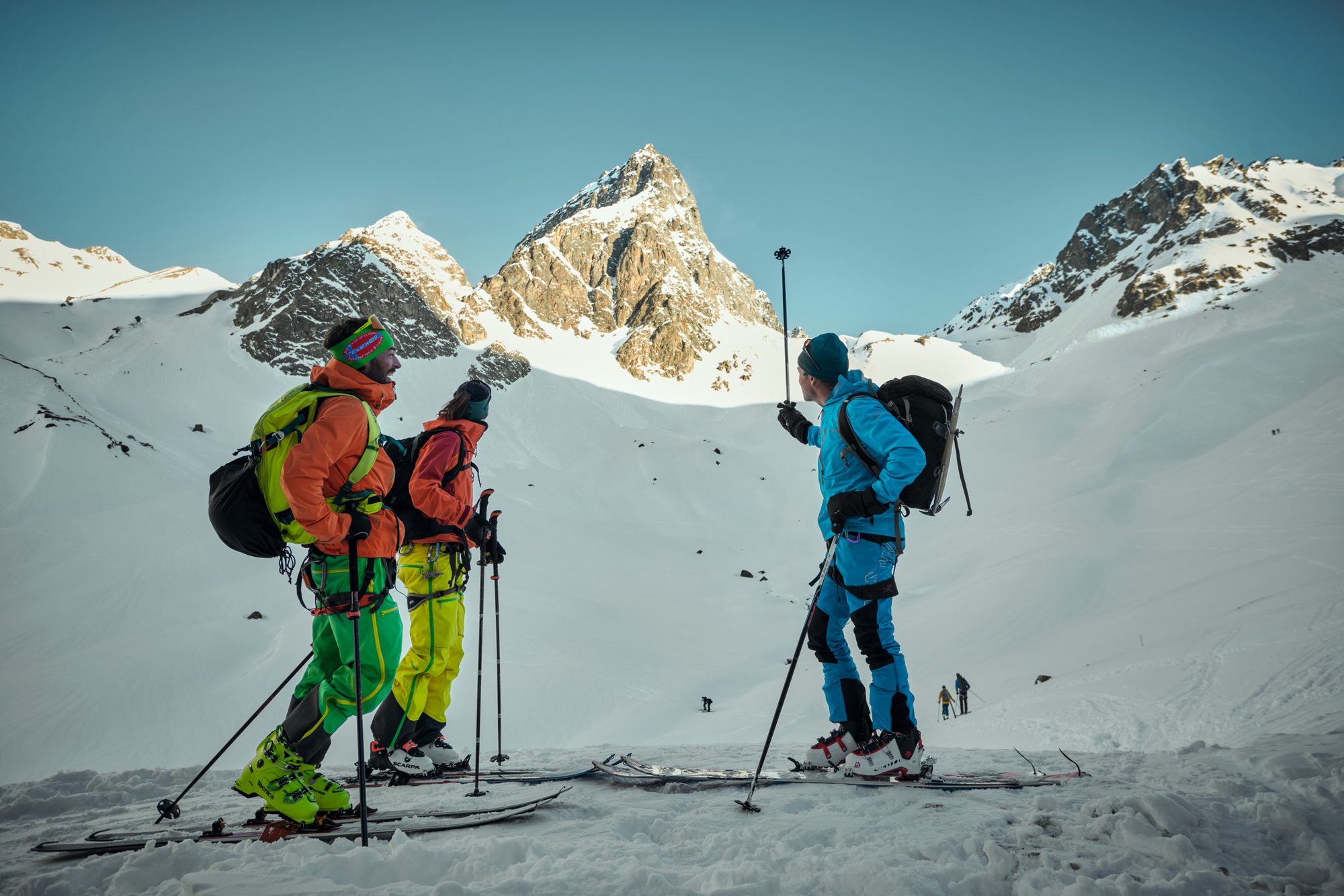
From Arosa you climb past the Untersee and Stausee lakes, on through the forest and across the Furggabödeli plateau to the Maienfelder Furgga. On the pass there is a small shelter where you can get out of the wind and get ready for the descent.
The descent
From the pass you ski down the Davos side via the Chummerberg to the Stafelalp, where a mountain restaurant makes the perfect lunch stop. From the Stafelalp the run continues through the forest all the way down to Davos Frauenkirch.
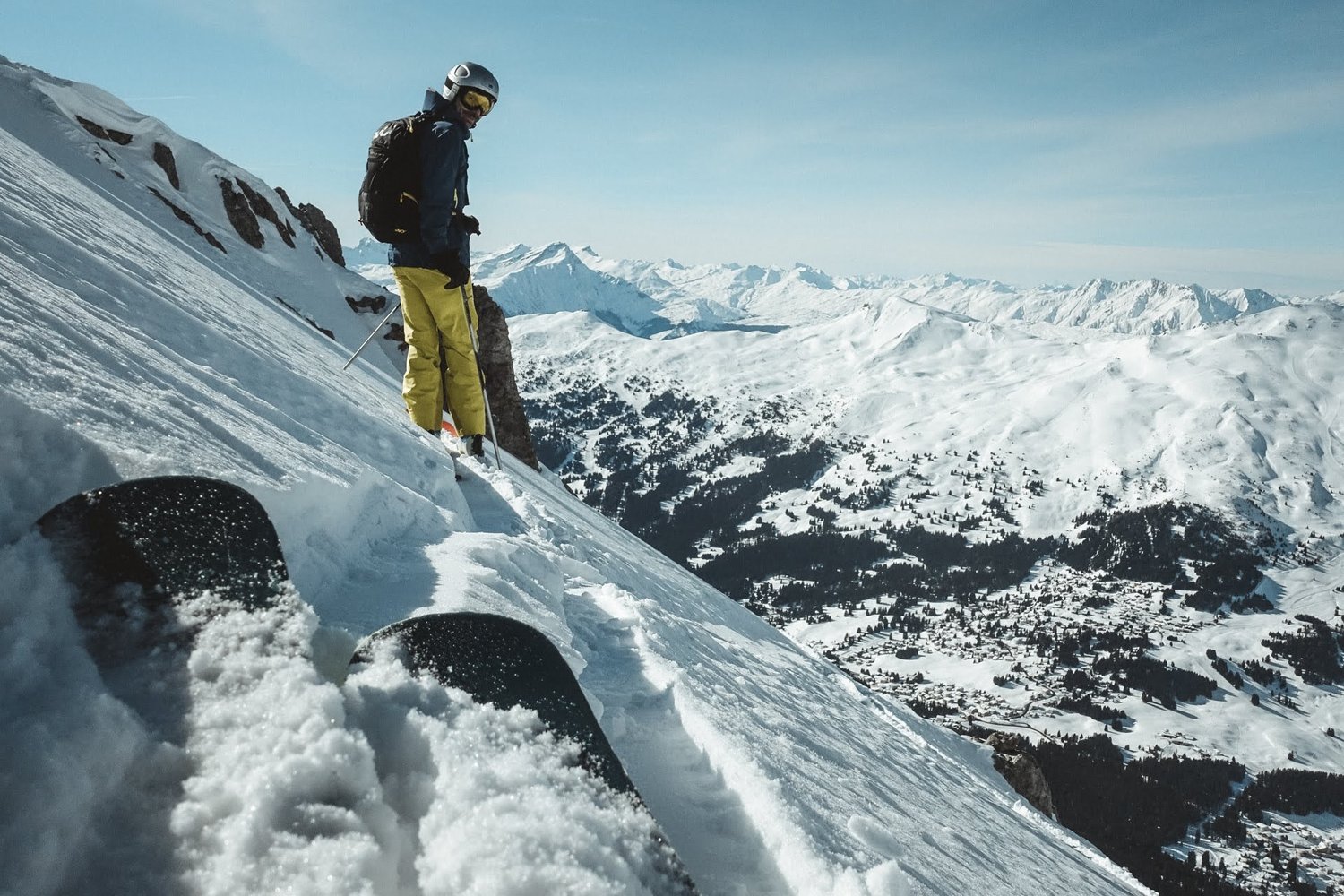
A variant for the strong: the Schwarzhorn
From the pass you can continue via the Tiejer Fürggli to the summit of the Schwarzhorn (2,759 m) before skiing down to the Stafelalp. It adds another climb to the day, but the view from the top is worth it.
Getting back
From Davos Frauenkirch a train or bus takes you into Davos. Back to Arosa it is the Rhaetian Railway via Landquart and Chur, which takes several hours. If you would rather skip the long train ride, stay the night in Davos and ski back the next day. Current connections are on sbb.ch.
Safety first. The route crosses open mountain terrain away from secured pistes. Always check the current SLF avalanche bulletin before you go (slf.ch or the White Risk app), carry a transceiver, shovel and probe, and know how to use them. If you don't know the terrain or aren't sure, go with a mountain guide. Conditions change every day, and the route sometimes has to be adapted.
Jára's tip: TODO (best month, where the snow is best on the descent, what to watch out for).
What to take
- touring skis or a splitboard, skins and ski crampons for hard snow
- avalanche transceiver, shovel and probe
- helmet, layers, spare gloves and a hat
- food, drink and money for lunch at the Stafelalp
- a map or an app with the route, and a charged phone
- a ticket or a plan for getting back
Try ski touring with us
On the Ski Eat Retreat (6–13 March 2027) you can try an introduction to ski touring: uphill technique, kick turns and your first tracks in powder, without stress or extremes. Jára holds the Swiss permit for guiding off-piste (RiskG).